
What Are Auto Captions? (How They Work, Accuracy, and Limitations)
 RenderCutCreator Tips
Auto captions are computer-generated text overlays that appear on a video in sync with the spoken audio, produced automatically by software without any manual typing.
They are created using Automatic Speech Recognition (ASR) technology, which analyzes the audio track of a video, detects speech patterns, converts spoken words into text, and timestamps each word or phrase to match when it was said.
Auto captions are also called automatic captions, automatic subtitles, AI captions, or AI-generated subtitles. All of these terms refer to the same technology: software that listens to a video and produces synchronized on-screen text without human transcription.
How Auto Captions Work
Every AI captioning tool runs through the same five-stage process under the hood, regardless of which platform or app generates them.
- Audio extraction. The software isolates the audio track from the video file, separating speech from background noise, music, and sound effects
- Speech detection. The ASR model identifies which parts of the audio contain human speech versus ambient sound
- Transcription. A language model converts the detected speech into text. Modern tools use transformer-based architectures similar to OpenAI's Whisper model, which achieves 95%+ word accuracy on clear audio
- Timing and segmentation. The text is broken into readable chunks and timestamped at the word or phrase level so each caption appears on screen at the correct moment
- Style rendering. The text is displayed on the video canvas using a default font, size, color, and position defined by the tool
The entire process happens automatically. You upload a video and receive a timestamped caption file within seconds to minutes, depending on the video length and the tool used.
Auto Captions vs Subtitles: What Is the Difference?
These terms are used interchangeably in most creator contexts, but technically they refer to different things.
| Term | Technical Definition | Practical Use |
|---|---|---|
| Captions | Same-language text transcription for viewers who cannot hear the audio | Making content accessible to deaf, hard-of-hearing, or muted viewers |
| Subtitles | Text translation for viewers who speak a different language | Reaching international audiences |
| Auto captions | Automatically generated captions using ASR technology | The method of generating captions, not the type |
In practice, when a creator says they are adding "auto captions" to their Reel or Short, they usually mean they want the spoken English text transcribed and displayed on screen for silent viewers. The technical distinction between captions and subtitles matters more in formal accessibility and broadcasting contexts than in everyday short-form video production.
Where Auto Captions Are Generated
Auto captions can be generated in several places depending on your workflow.
- Built into social platforms. Instagram, TikTok, YouTube, and Facebook all offer native auto-captioning that generates captions from your video after upload. These are toggled on or off by viewers and offer no styling control.
- Built into video editors. CapCut, Premiere Pro, DaVinci Resolve, and VEED include auto-caption features within their editing timelines. These offer more editing control than platform-native captions.
- Dedicated AI captioning tools. Standalone tools like RenderCut, Submagic, and others focus entirely on generating, styling, and exporting captions with more customization than general-purpose editors offer.
How Accurate Are Auto Captions?
Modern AI caption engines typically deliver a clean first draft with 90 to 99% accuracy on clear speech. Accuracy drops in the following conditions:
- Background noise that the ASR model cannot fully separate from the speech
- Strong or unfamiliar accents the model was not heavily trained on
- Fast speech that leaves less audio signal per word for the model to analyze
- Overlapping speakers in group conversations or interviews
- Technical vocabulary, brand names, or industry-specific terms the model has not encountered in training
For short-form video with a single clear speaker and minimal background noise, auto-generated captions typically require only minor corrections before they are ready to publish.
What Auto Captions Do Not Do
Auto-generated captions solve the transcription problem. They do not solve the performance problem.
Default auto captions are optimized for accuracy, not for viewer retention. They display full sentences in default fonts with no visual hierarchy, no keyword emphasis, and timing synced to audio timestamps rather than speech rhythm.
Research consistently shows that the presence of captions alone does not significantly improve retention metrics. What improves retention is captions that are styled for how viewers actually scan text on mobile screens: short chunks of 3 to 5 words, highlighted keywords, and timing that matches the natural rhythm of speech.
This gap between "captions exist" and "captions perform" is why dedicated caption tools exist as a separate category from platforms that auto-generate text. The difference in output is visible: auto-generated flat text versus chunked, highlighted, branded captions that guide the viewer's eye and keep attention on the content.
For why default auto captions consistently underperform styled captions, see Why Auto Captions Look Bad (And How to Make Them Look Professional). For the styling system that drives measurable retention improvements, see Best Caption Styles That Increase Video Retention and Engagement.
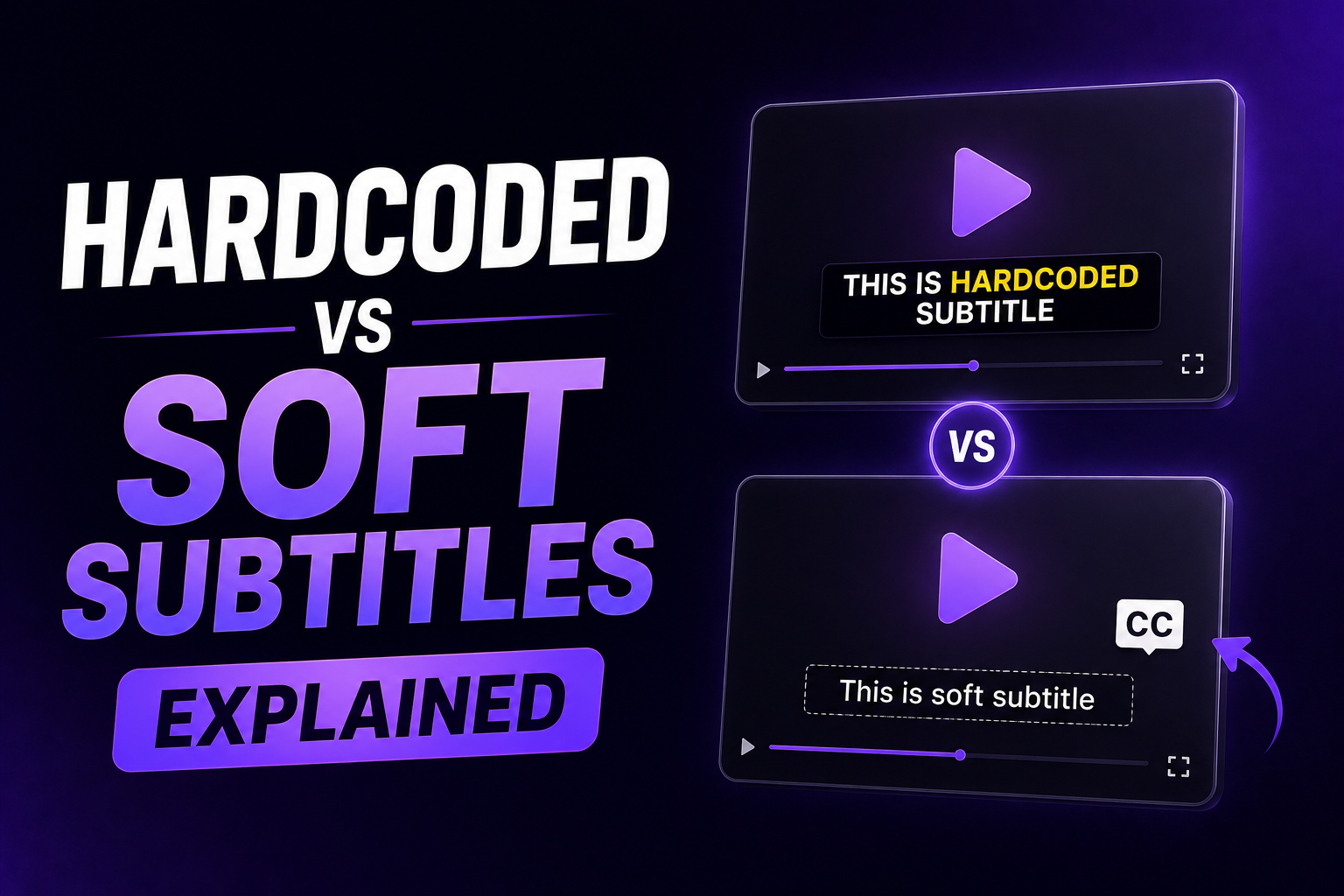
Hardcoded vs Soft Auto Captions
Auto captions can be exported in two formats, and understanding the difference affects how and where you use them.
| Type | Description | Best For |
|---|---|---|
| Hardcoded (burned-in) | Captions are permanently part of the video file, visible to everyone | Social media (Reels, Shorts, TikTok), ads, any platform where you want all viewers to see captions |
| Soft captions (SRT/VTT) | Captions are a separate file that can be toggled on or off | YouTube long-form, web video players, accessibility compliance |
For short-form social video, hardcoded captions are the standard approach. For YouTube or web video where accessibility compliance and viewer preference matter, a soft caption track uploaded alongside the video is the better choice.
Frequently Asked Questions
What are auto captions?
Auto captions, also called automatic captions, are computer-generated transcriptions produced using Automatic Speech Recognition (ASR) technology. They are displayed on screen in sync with the words spoken in a video.
Are auto captions accurate?
Auto captions achieve 90 to 99% accuracy on clear audio with a single speaker and minimal background noise. Accuracy drops with background noise, heavy accents, fast speech, overlapping speakers, or technical vocabulary. A brief review of the generated transcript before publishing is recommended for any content where accuracy matters.
What is the difference between auto captions and subtitles?
Captions are same-language transcriptions for viewers who cannot hear the audio. Subtitles are translations into a different language. In practice, both terms are used interchangeably in social media contexts. Auto captions are captions generated automatically by software rather than typed manually.
Do auto captions improve video performance?
Caption presence alone has a modest impact on performance. Styled captions (short chunks, highlighted keywords, synced timing) consistently improve watch time and engagement significantly more than default auto-generated captions. The styling choices applied after auto-generation are what determine whether captions drive retention.
Are auto captions free?
Most platforms offer auto-captioning for free as a built-in feature: YouTube Studio, TikTok, and Instagram all generate captions at no cost. Dedicated captioning tools typically offer free tiers with limited video counts, upgrading to paid plans for higher volume and more styling options.
Final Word
Auto captions are the starting point of a caption workflow, not the finished product. They solve the transcription problem accurately and quickly. What happens after generation, the chunking, highlighting, timing adjustment, and style choices, determines whether those captions actually help the video perform.
RenderCut generates accurate AI auto captions and gives you the word-level styling tools to turn them into retention-driving captions. Try RenderCut free and see the difference styled captions make on your next video.
References
- Canva - Auto caption definition and ASR technology overview
- ChatCut - How AI captions work: five-stage process from audio extraction to style rendering
- Pixflow - AI automatic captions in 2026: accuracy benchmarks, ASR model architecture, and time savings data
- OpenAI - Whisper ASR model documentation and word accuracy benchmarks